
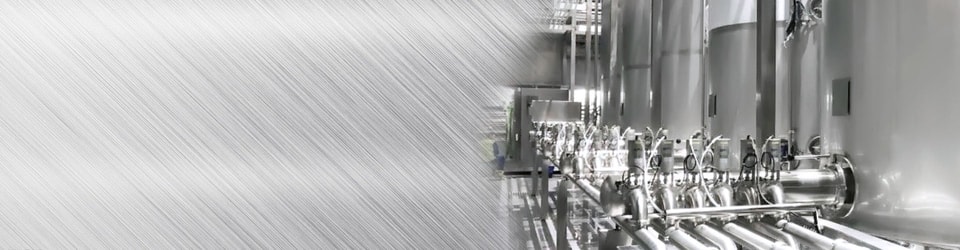
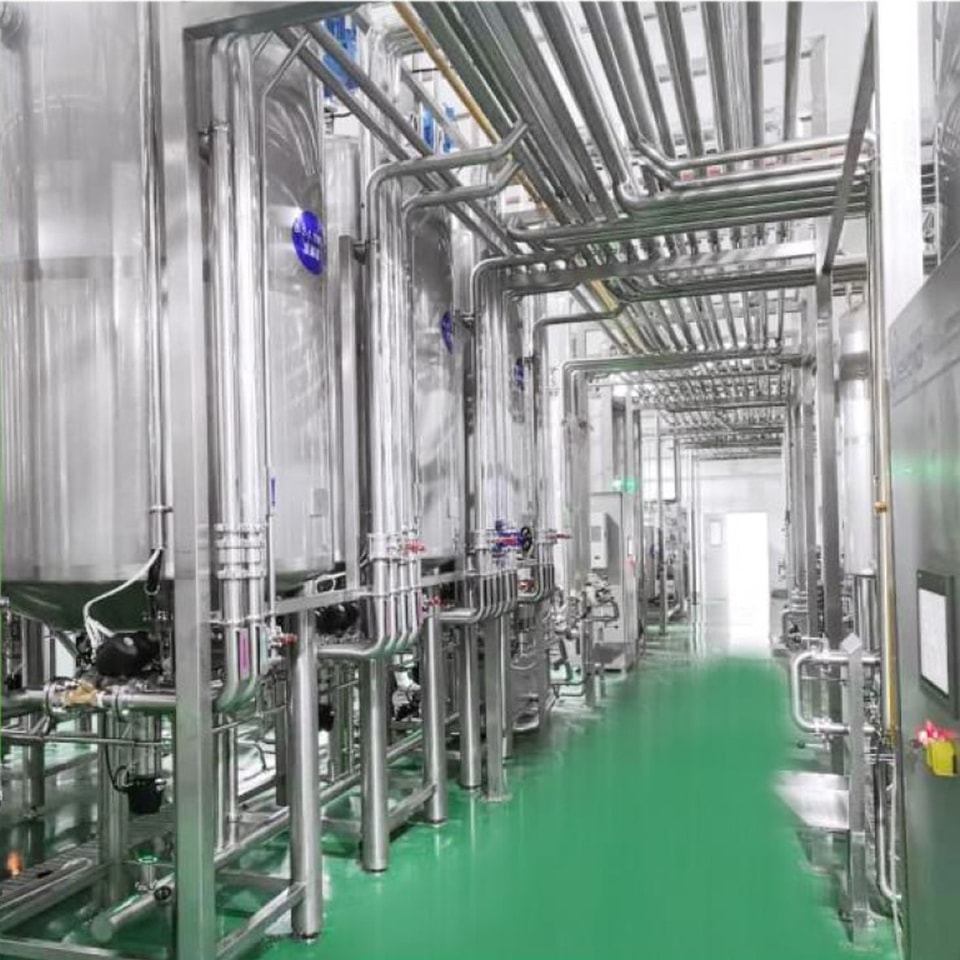
Yogurt production line
DESCRIPTION
The pretreatment of the milk is the same, regardless of whether set or stirred yogurt is to be produced. It includes standardisation of the fat and dry matter contents, heat treatment and homogenisation. It is assumed that the milk has been standard ised to the required fat content before entering the line and standardisation of the dry matter content takes place in an evaporator in the process line. If the dry matter content is adjusted by addition of milk powder,the equipment used is similar to that described under “Recombined milk”. Anyadditives, such as stabilisers, vitamins, etc., can be metered into the milk before the heat treatment.
When the yogurt milk has been pretreated and cooled to inoculation temperature, the procedure for further treatment depends on whether set,stirred, drink, frozen or concentrated yogurt is to be produced. The quality of the yogurt in terms of texture and flavour is essential.
BENEFIT
1.Opportunity to realize products with customized recipes.
2.Opportunity to produce more than one product with the same processing line.
3.Accurate dosing of mixing and additional fruit and aromas.
4.High quality of the final product keeping an elevated nutritional value.
5.Wide customization of the final product.
6.Maximum yield, minimum production waste.
7.Highest energy savings thanks to the most advanced technologies.
8.Complete line supervision system through monitoring of every process phase.
9.Recording, visualization and printing of all daily production data.
CONSTRUCTION FEATURES
Working capacity from 5 tons/d up to 100 tons/d
Products
- Stirred yogurt
- Stirred yogurt with fruit puree or flavor
- Yogurt with cereals, fibre
- Set yogurt
- Drinking yogurt
- Frozen yogurt
- Concentrated yogurt
- Kefir
- Package in cup, gable top carton, bottle
9/27, 2021
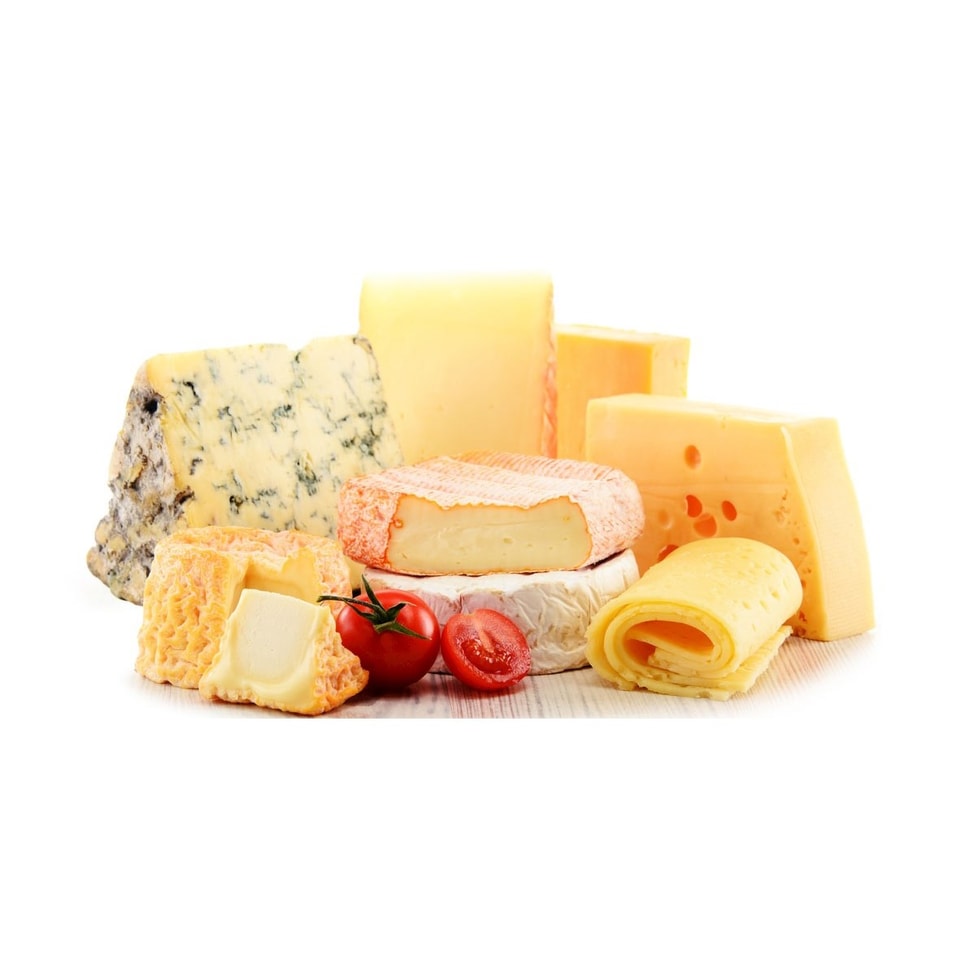
Condensed milk production line
DESCRIPTION OF SWEETENED CONDENSED MILK (SCM)
Before evaporation, the fat and solids- non-fat values of the milk have been standard ised to predetermined. The milk has also been heat treated to destroy micro-organisms and enzymes which could cause problems and to stabilise the protein complex. Heat treatment is also important to the development of product viscosity during storage, and is particularly important in the case of sweetened condensed milk. The addition of sugar is a key step in the manufacture of sweetened condensed milk, as the shelf life of the product depends on its osmotic pressure being sufficiently high. A sugar content of at least 62.5% in the aqueous phase is required.
Two methods are used for addition of sugar:
•Addition of dry sugar before heat treatment
•Addition of sugar syrup in the evaporator
The stage at which the sugar is added affects the viscosity of the end product.The evaporator is usually of the multistage falling-film type. When sugar is added in the evaporator, the syrup is drawn into the evaporator and mixed with the milk at the half-way stage of the process. Evaporation then continues until the required dry matter content has been reached. The dry matter content is checked continuously by determining the density of the concentrate.
Sweetened condensed milk must be cooled after evaporation. This is the most critical and important stage in the whole process. The water in the condensed milk can only hold half the quantity of lactose in solution. The remaining half will therefore be precipitated in the form of crystals. If the surplus lactoseis allowed to precipitate freely, the sugar crystals will be large and the product will be gritty and unsuitable for many applications. It is consequently preferable to control the cry stallisation of lactose so that very small crystals are obtained. The required cry stallisation is accomplished by cooling the mixture rapidly under vigorous agitation, without air being entrapped. The cooled condensed milk is pumped to a storage tank where it is kept until the following day to allow the cry stallisation process to be completed.
Sweetened condensed milk should be yellowish in color and have the appearance of mayonnaise. Traditionally, it is packed in cans, which in this case must be cleaned and sterilised before filling as no sterilisation takes place after canning. Nowadays it is also possible to pack sweetened condensed milk inaseptic paperboard packages. The product is also packed in big barrels, holding
about 300kg, for supply to large-scale users.
ADVANTAGES:
1.Opportunity to realize products with customized recipes.
2.Opportunity to produce more than one product with the same processing line.
3.Wide customization of the final product.
4.Maximum yield, minimum production waste.
5.Highest energy savings thanks to the most advanced technologies.
6.Complete line supervision system through monitoring of every process phase.
7.Recording, visualization and printing of all daily production data.
PRODUCTION LINE FEATURES
Working capacity
from 5 tons/d up to 100 tons/d
Products
- Sweet ened condensed milk
- Evaporated milk without sugar
- Condensed milk in varied package:
9/27, 2021
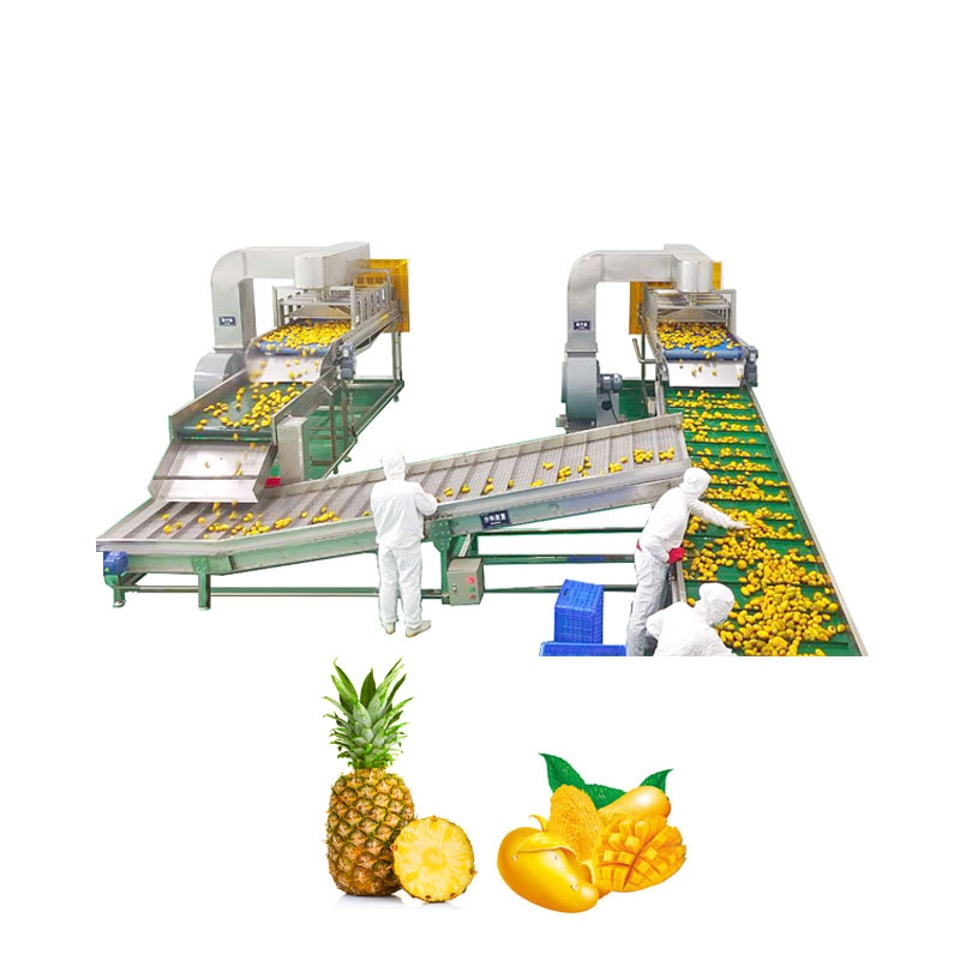
Mango & pineapple processing line
Description:
Mango and pineapple is a famous tropical fruit, Because of its delicate flesh, unique flavor, which is very popular and known as the "king of tropical fruit" fishery. Complete plant of mango and pineapple processing equipment including following procedures, washing the fresh mango and pineapple, peeling, pulping, crushing, squeezing, enzymalisis, membrane filtrating, concentrating, sterilizing, filling process etc. The fresh mango and pineapple can be processed into the transparent juice and cloudy juice, then packed into the gable top box, tetra pak, aseptic bags, sterile vats and other containers, achieving the purpose to sell in cold chain or normal temperature.
1 The processing capacity is varied from 60 tons/day to 1500 tons/day.
2 The line Can deal with similar characteristic of fruits.
3 Using the high efficient of mango destoner to improve the mango output percentage effectively
4 Using efficient belt juice extractor to improve the juice efficiency and the output percentage of pineapple.
5 The production process fully automatic PLC control to save labor and Facilitate production management
6 Low-temperature vacuum evaporation ,Maximize reserve the flavor substances and nutrients also save energy.
7 Tubular UHT sterilizer and Aseptic filling machine, produce high-quality aseptic juice products
8 Automatic CIP cleaning ,ensure the entire line equipmen of food hygiene and safety requirements
Technical Parameter:
Raw material
Fresh Mango / pineapple
End product
Transparent juice and cloudy juice, concentrated juice and nfc
Processing capacity
60- 1500 tons / day
Output percentage
50-75%
Solid content in NFC
10-20Brix
Solid content in concentrated juice
60~72Brix
End package
Aseptic bag/gable top box/tetra pak/PET bottle
9/22, 2021
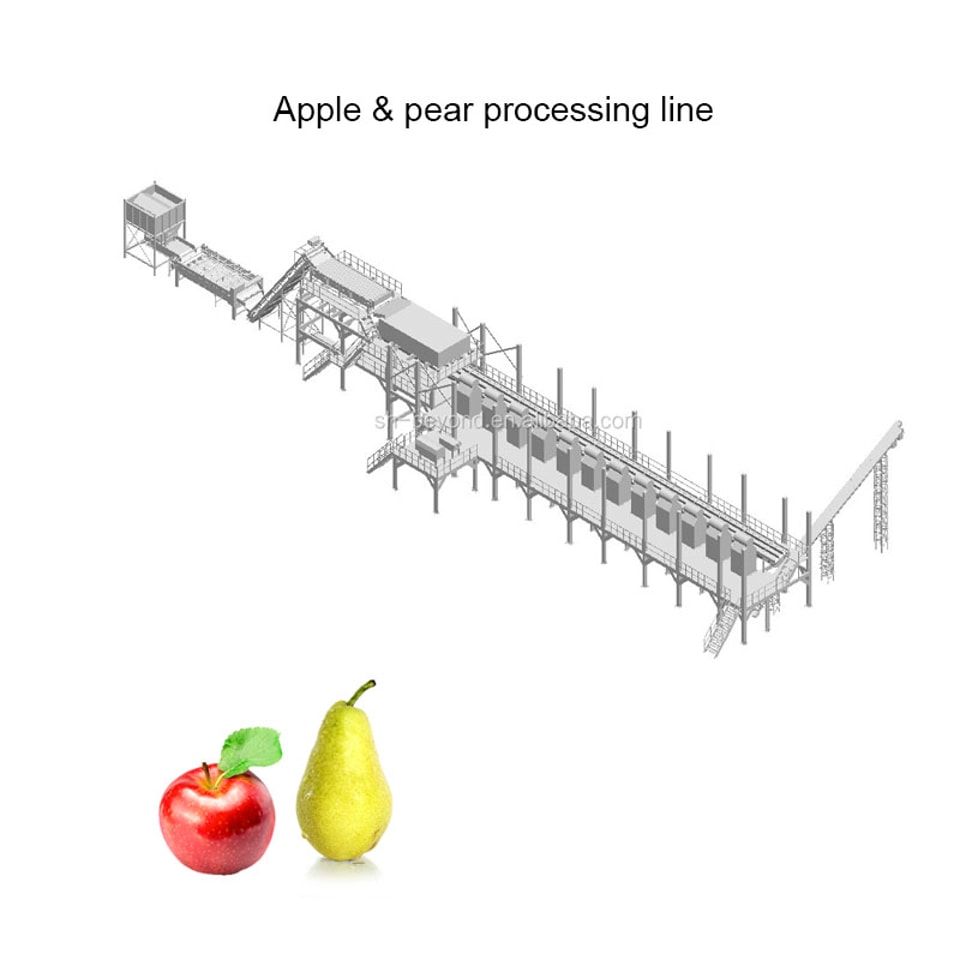
Apple & pear processing line
Description:
China is the world's largest producer of apples and pears The end product is divided into transparent juice, cloudy juice ,NFC fresh nature juice, and juice concentrate. Complete plant of apples and pears processing equipments include washing ,crushing, squeeze extractor, enzymolysis, evaporator, sterilizer, aspetic filling and etc. Beyond has created apple and pears processing equipments with different functioens like crusher, squeeze extractor are simple construction, easy operation, High production efficiency have positioned Beyond as the Chinese market leader in the worldwide.
System Advantages:
1 The processing capacity is varied from 60 tons/day to 1500 tons/day.
2 This line can handle similar fruits with similar characteristics.
3 Automatic disinfection liquid concentration control system, effectively guarantee the sterilization effect and control the disinfection residue.
4 Efficient crusher improved the high output percentage of apples and pears.
5 Using efficient belt juice extractor to improve the juice efficiency and the output percentage.
6 The production process fully automatic PLC control to reduce the labor intensity and Improve production efficiency.
7 Low-temperature vacuum evaporation 8 Greatly reduce the flavor substances and nutrient losses.
8 A variety of energy recovery measures , increased the energy utilization and greatly reduce production cost.
9 Tubular UHT sterilizer and Aseptic filling machine, Isolated from the pollution of bacteria,ensure the safety of the food and extend the shelf life of the product.
10 A complete set of production with self CIP system reduce the labor intensity and ensure the high level sanitation.
Technical Parameter:
Raw material
Fresh fruit apple/pear
End product
Transparent juice,cloudy juice, nfc and concentrated juice,cider and cider vinegar etc
Processing capacity
From 60tons/day to 1500 tons/day
Output percentage
60-75%
Solid content in NFC
10-12Brix
concentrated juice content
65-72Brix
End package
Aseptic bag/gable top box /PET bottle
9/22, 2021
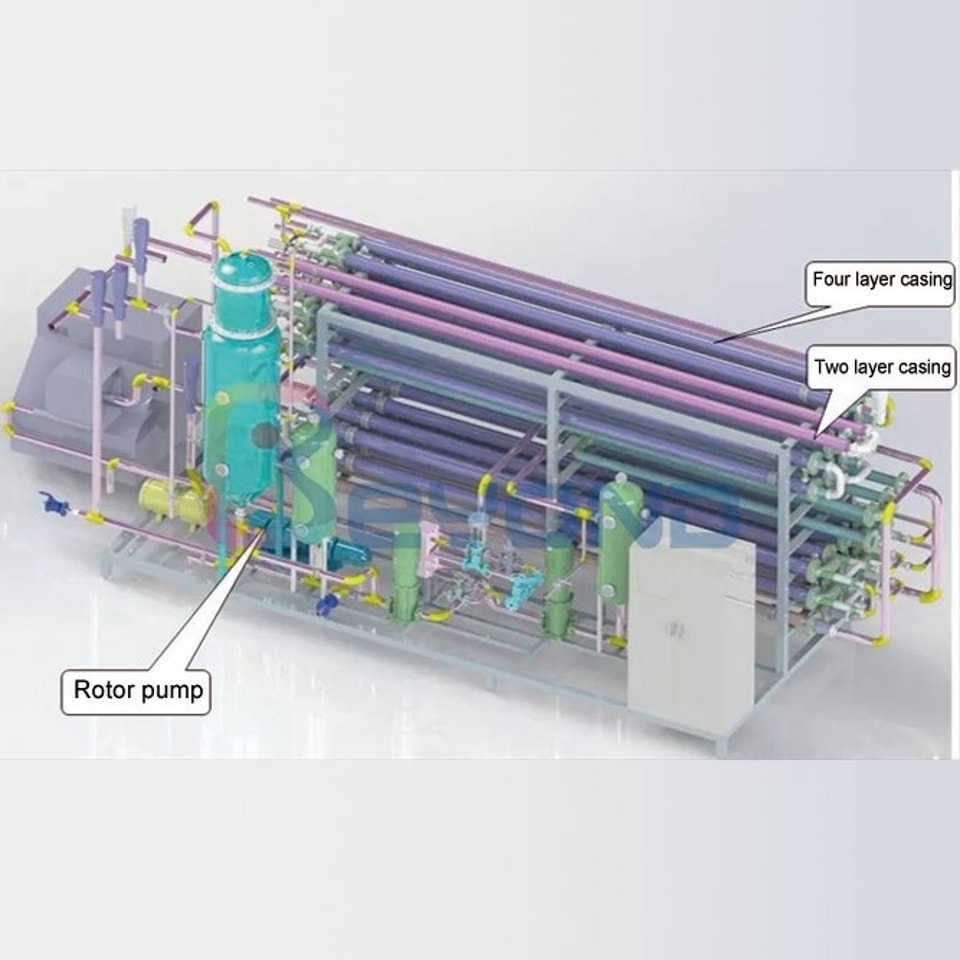
Aseptic tubular UHT sterilizer
Scope of application:
Pulp、vegetable pulp、concentrated pulp and materials containing particles、fibers、etc
Mainly used for aseptic filling packing types products, such as Tetra paper brick, Tetra paper Pillow, aseptic soft plastic bag, aseptic PET bottles, especially used for liquid milk and juice.
Technical:
(1)5℃→65℃(homogenizer)→137℃(3-5S)→20℃-25℃,for aseptic filling;
(2)5℃→65℃(homogenizer)→115℃/125℃(5-15S)→88℃-90℃,for hot filling;
(3)5℃→65℃(homogenizer)→115℃/125℃(5-15S)→75℃-78℃,for middle temperature filling;
Siemens PLC Full-Auto control with touch screen
Equipment advantages:
Tube sterilization machine can be used to heat treatment of various liquid food and beverages, compared with other types of sterilization machine has the following advantages.
(1)Heating medium and material temperature difference is small, heat exchange tube using Four sets of tubes, heat exchange efficiency is high, less fouling, increased the working time of the sterilization machine.
(2)High degree of automation, from the equipment CIP cleaning, equipment suicide bacteria to material sterilization of the entire process can achieve automatic control, recording.
(3)Sterilization temperature control is accurate and reliable, steam pressure, flow, material flow, etc. are strictly automatic control.
All made by stainless steel, match the food sanitary standard.
(4)The material tube inner wall using advanced technology polishing and automatic welding, pipe design to achieve complete automatic cleaning, equipment whole process suicide bacteria, to ensure that the system aseptic.
(5)Strong system safety, system accessories are selected with good performance and high reliability of products, steam, hot water, materials, etc. have pressure protection measures and alarm system.
(6)High system reliability, the main components such as material pumps, hot water pumps, all kinds of valves, control system electrical components and executive components are world famous.
(7)Its own SIP system.
Equipment structure:
Overall structure
As shown in the figure, the equipment is mainly composed of heat exchangers, pumps, pipe valves, steam systems, electrical control systems, etc., the heat exchanger is divided into two layers (return cooling section) and four layers (heating, cooling section, heat recovery section)
Equipment characteristics:
It is used for heat exchange between media and materials. The materials are wrapped by the media on the upper and lower sides to form film heat transfer and improve the heat exchange efficiency.
The casing sterilizer is different from the tubular sterilizer. When the materials flow, the pressure will act on the outside of the heat exchange pipe. At the same time, because the materials processed by the casing sterilizer generally have high viscosity and high pressure on the material side, the pump for conveying the materials is generally positive pressure pump (screw pump and rotor pump), so that the heat exchange pipe bears large external pressure. In order to prevent the damage of the heat exchange pipe under pressure (such as flat pipe), It is necessary to check the external pressure strength of the heat exchange tube.
Pt / G is a pressure sensor. When the set value is exceeded, it controls Qv5 to reverse, and the material returns to the balance drum to protect the rear pipeline.
The materials processed by the casing sterilizer generally have high viscosity and low heat transfer coefficient. The design material flow rate should not be too high to avoid excessive pipeline pressure. The material flow rate of the casing sterilizer is 0.3-0.5m/s; The width of material interlayer shall not be less than 13mm.
If you got any question about Casing sterilization machine , please contact Beyond service engineer freely.
8/30, 2021
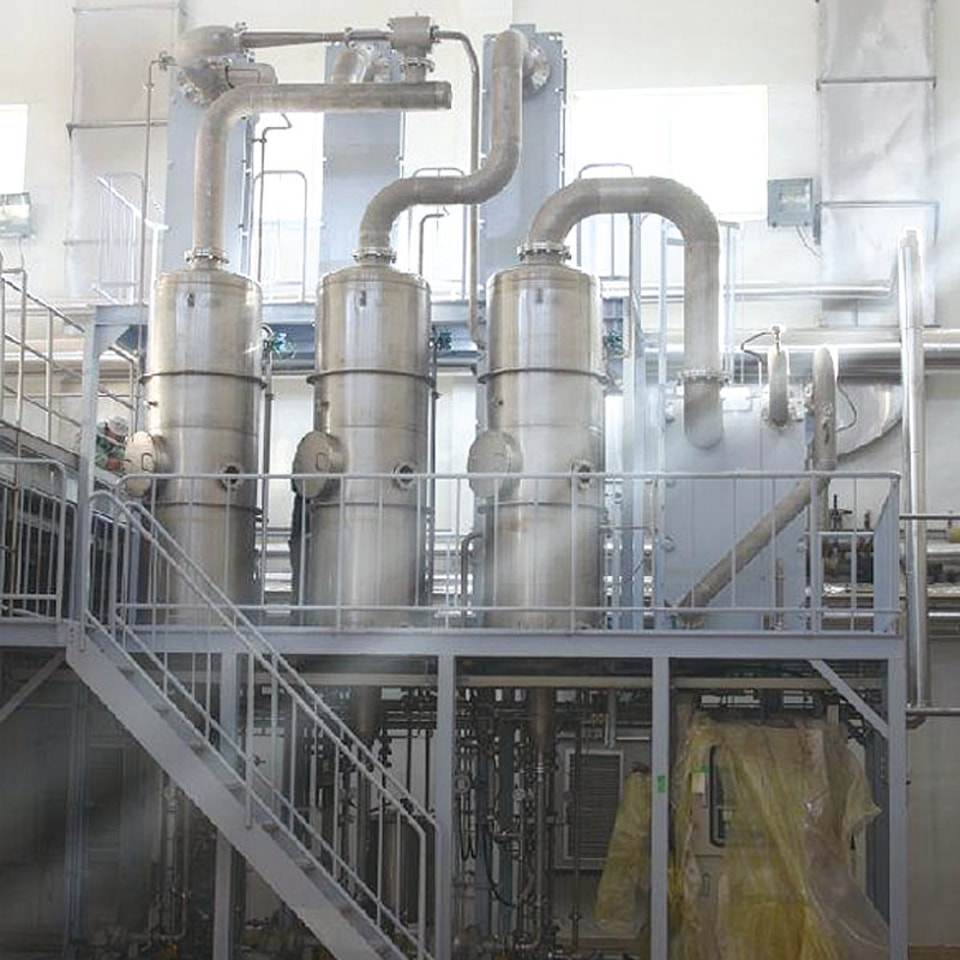
High efficiency concentration system
Scope of application:
Concentration refers to the process of removing water from liquid food by physical methods, and also refers to the operation process of increasing the concentration of solution. The concentration process is widely used in the food processing industry. For the concentration of bone soup, due to its special composition and physicochemical properties, it is necessary to select appropriate concentration equipment for processing. At present, our devices for bone element concentration mainly include external circulation rising film concentrator, external circulation falling film concentrator, plate evaporation concentrator, steam recompression concentrator and membrane concentrator, but most of these devices have problems such as large steam emission and material running in the application process. Through the previous technical research, this project puts forward the high-efficiency concentration technology, which takes livestock and poultry bone as raw material, and uses modern membrane technology, MVR and other technologies to realize the separation and concentration of bone extract to produce high value-added bone products.
Performance characteristics:
1. The whole system has reasonable and beautiful design, stable operation, high efficiency and energy saving, and low steam consumption;
2. Large concentration ratio, forced circulation, so that the liquid with high viscosity is easy to flow and evaporate, and the concentration time is short;
3. The special design can realize the switching effect through simple operation, so as to adapt to the production of different products;
4. The evaporation temperature is low, the heat is fully utilized, and the feed liquid is heated gently, which is suitable for the concentration of heat sensitive materials;
5. Through forced circulation, the evaporator is heated evenly in the tube with high heat transfer coefficient, which can prevent the phenomenon of "dry wall";
6. The feed liquid enters the separator for separation, which strengthens the separation effect and makes the whole equipment have greater operation flexibility;
7. The whole set of equipment has compact structure, small floor area and simple and smooth layout, which represents the development direction of large-scale complete set of evaporation equipment;
8. Continuous feeding and discharging, and automatic control of feed liquid level and required concentration can be realized;
9. Evaporation capacity is designed according to customer needs.
technological process:
8/18, 2021
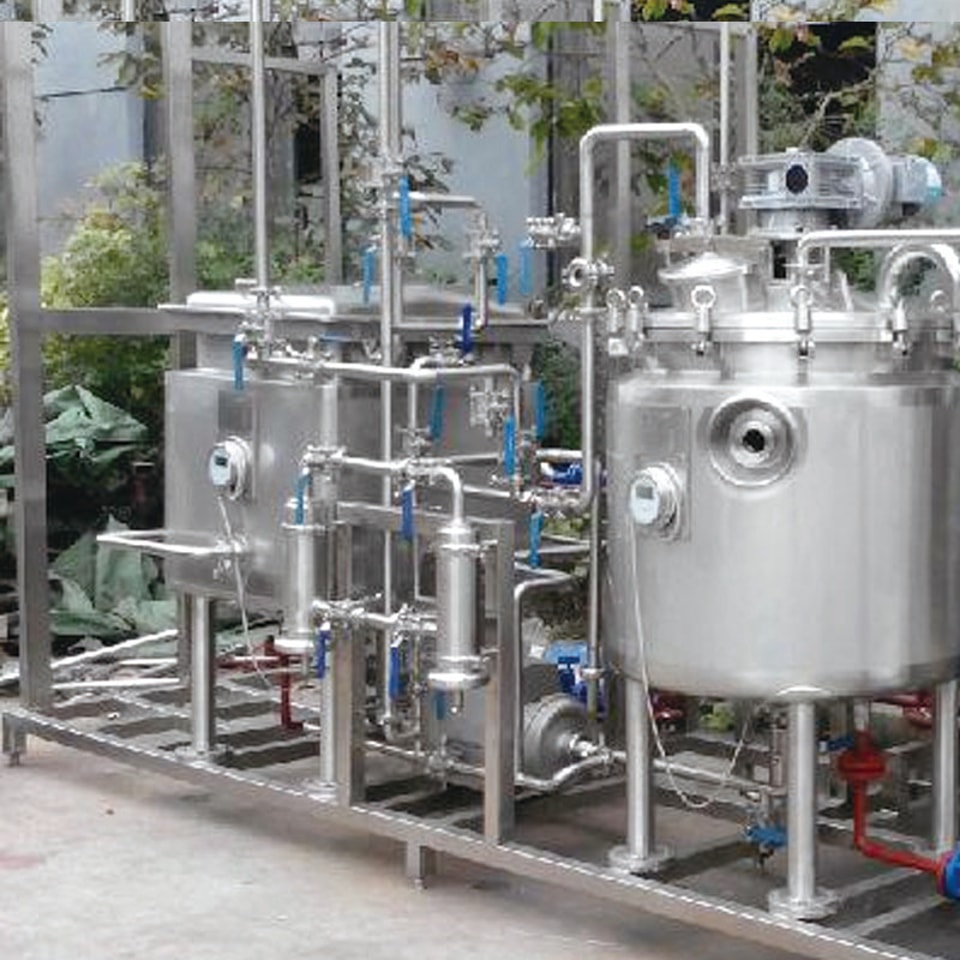
Bone and meat deep processing production line
8/18, 2021
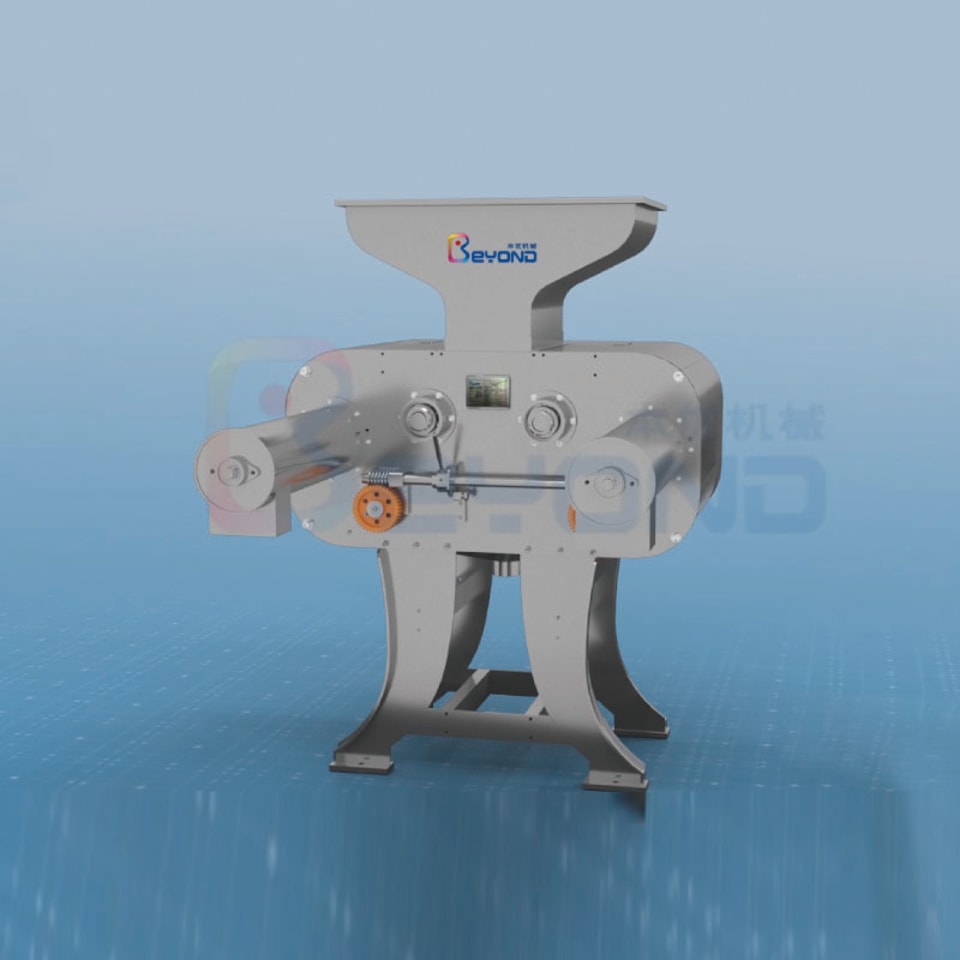
Brief introduction of roll half cutting juice extractor
Main application:
This equipment is mainly used for crushing and juice extraction of oranges, citrus and other fruits & vegetables. It is designed according to the hygienic requirements of the food industry, simple to operate, convenient to use and maintain, and can be used on the automatic processing line.
Main features :
Machine support designed with whole frame welding structure, good rigidity and small vibration.
Compact structure, small floor space, reliable operation; Optimized design of each component makes cleaning and replacement more convenient.All stainless steel manufacturing, comply with food hygiene standards.Installed in the processing line, automatic production with low labor intensity.
The press roller has protruding needles on the surface to grab the fruit.
The press roller and the sieve are half crescent shape, and the gap gradually decreases from large to small, which can squeeze the pulp well.
Automatic separation of fruit pulp and peel, high production capacity, the gap between extraction roll and filtration net will be adjusted according to different products.meet the requirements of production.
Components of the equipment :
Fruit ready to be extracted come from the procedure into the extractor feed hopper, from the feed hopper to the middle of two squeezing roller, needle shaped squeezing roller surface will be holding the fruit by extruding, in the process of extrusion, will contact with cutting knife, the cutting knife cut fruit, with the press roll rotation, the fruits keep turning, filtration net and pulp further squeeze, thus the pulp and peel to further separation.
That's all what we had talked today about the Brief introduction of roll half cutting juice extractor. please contact Beyond service engineer if you got any question.
7/28, 2021
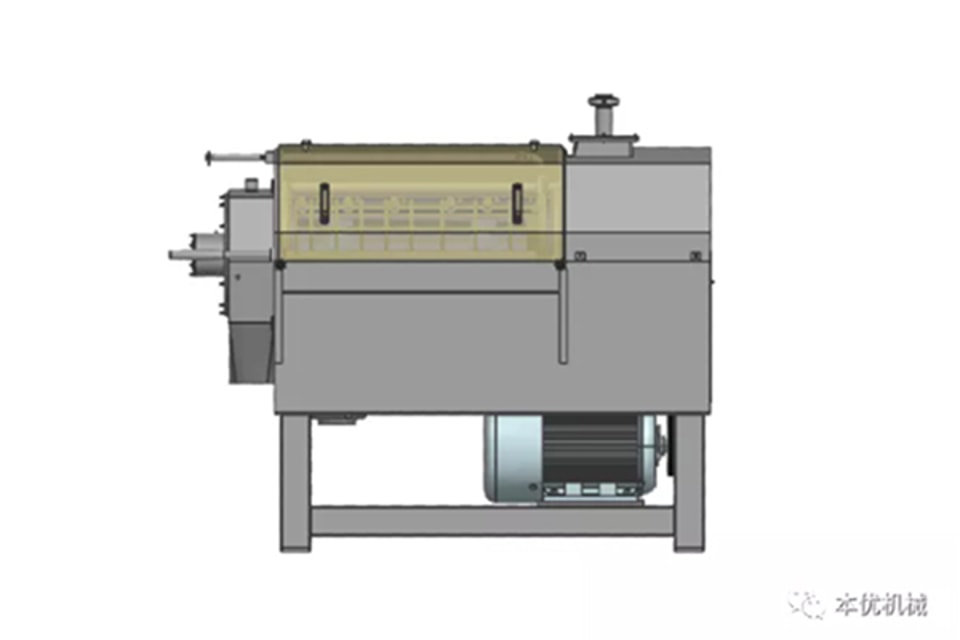
Instruction for scraper refiner
Main usage: Scraper refiner is mainly used for the separation of juice from the crushed citrus pulp and fiber to improve the juice yield.
Scope of application: Separation for citruspulp fiber.
Main feature:
Machine support designed with whole frame welding structure, good rigidity and small vibration.
The waste drainage gate designed with air cylinder adjusting structure, it can separate the juice much more completely by adjusting the air cylinder pressure.
All stainless steel manufacturing, comply with food hygiene standards.
Designed with auto cleaning interface, built-in multi-angle sprinkler, high degree of cleaning automation.
Can be equipped in a processing line, auto production with low labor intensity.
The machine design with complete close structure except the product inlet and outlet, good safety performance.
Working environment:
The scraper refiner better working in the environment with following requirement: relative humidity is not more than 70%, temperature lower than 40℃, dry and ventilated, covered. No corrosive gas allowed.
Working principle:
When working, the pulp & fiber of the citrus enters through the feeding port and is pushed into thesieve by the feeding screw. The material is transported by the screw propeller.In the conveying process, the pulp and juice are separated by the pressure between the screw propeller and the sieve, and the waste is pushed to the outlet.
The separation of materials is mainly controlled by thecylinder installed in the end separation section, and the degree of separation is mainly determined by the sieve size and the size of the waste discharge port adjusted by the cylinder.
Machine support is used to support the weight of the machine.
The screw propeller iscomposed of double screw, propelling the material at a fast and steady speed.
The high-pressure cleaning system is installed around the sieve. The cleaning ring is moved manually along the length of the sieve screen, and the high-pressure water spray is applied to the siev. The high pressure cleaning system can be cleaned when the machine is stopped or running.
The sieve body is composed of two screen frames and two screens. It is mainly used to separate fruit residue and other objects in fruit juice.
The motor mainly provides power to the whole machine, which is transmitted to the rotor through the belt wheel and v-shaped belt.
The left and right doors can be opened as needed,generally used to take out the screen and clean the inside of the shell thoroughly at regular intervals.
The shell is equipped with spray device, which is used to clean the screen and the inner wall of the shell after each shift.
Considering the juicing rate of the equipment, the size of the slag outlet is adjusted by the cylinder at the slag outlet to increase the time of the fruit residue staying in the sieve, and also increase the pressure of extrusion, so as to get more juice.
That's all what we introduced here about the scraper refiner, please contact Beyond service engineer if you got any question.
7/1, 2021
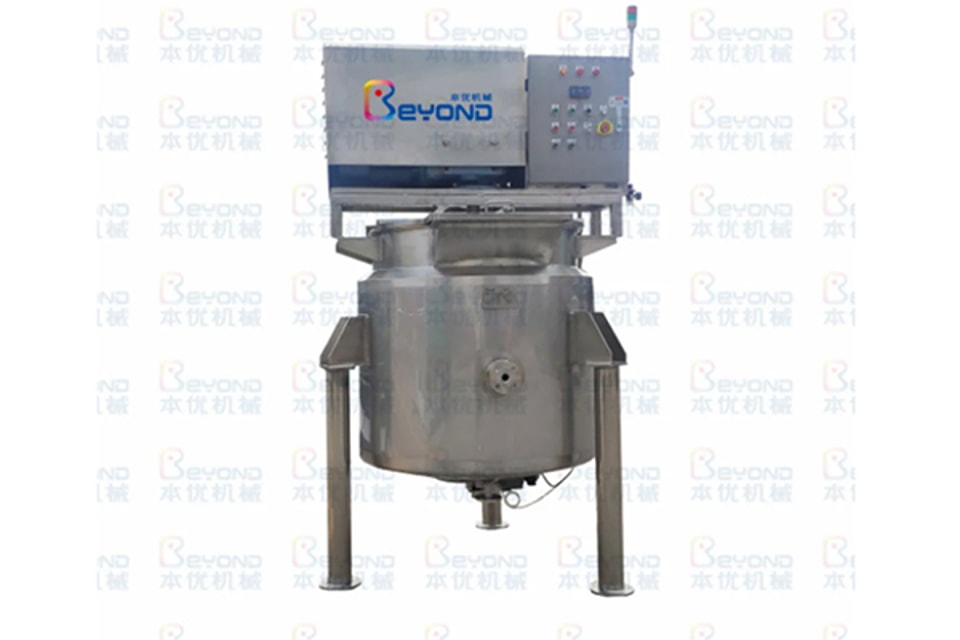
Vertical Mixing Tank With Double Reducer Motor
Descripción del equipo:
El tanque de mezcla está compuesto por un cuerpo de tanque de mezcla, un agitador de paletas, una mezcla montada en la pared de tipo marco, un soporte inferior, una camisa de bobina, un dispositivo de transmisión, un dispositivo de sellado del eje, etc.
Scope of application:
The tank is suitable for sauces, dairy products and oils&fats, and is specifically used in the production and processing fields of dairy products and oils.
Working principles:
The tank has a coaxial double mixing structure. Paddle mixing and frame wall-mounted mixing directions are reversed. In this way, grease or oil blocks are easier to be cut and melted when entering the tank ,and the scraper sticks to the wall and rotates. Don’t let grease stick to the wall and affect the heating effects, and completely prevent the grease from sticking to the wall and coking. The heating coil is designed with two stages, which also meets the requirements of small batch production, flexible production and suitable for different working conditions.
Equipment advantages:
Simple operation and continuous work;
It can be installed on the production line and also can perform the production independently;
All materials contact with the product are made of high quality stainless steel which meet food sanitary requirements;
The unique buffer and guiding structure is designed at the medium inlet, which can make the steam enter the coil evenly, avoiding the impact on the tube wall, warming uniformly, and warming up stable.
The tank is equipped with CIP cleaning ball, which is convenient for cleaning.
The heating coil is designed with two stages, which also meets the requirements of small batch production, flexible production and suitable for different working conditions.
That's all what we had talked today about Vertical mixing tank with double reducer motor, please contact beyond service engineer if you got any question.
1/20, 2021
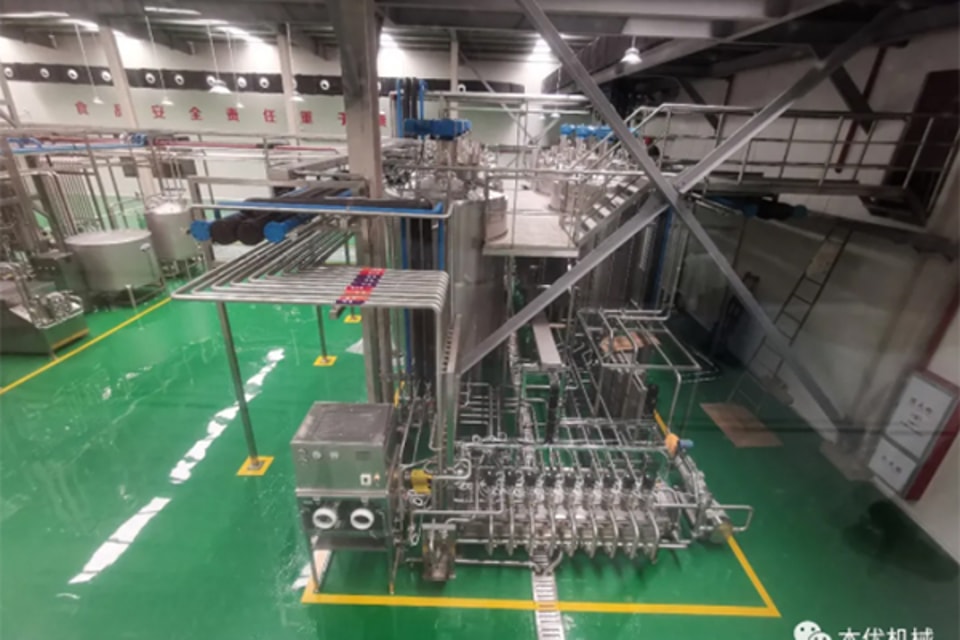
Brief Analysis Of Yoghurt Fermentation System
With the continuous improvement of living standards, people's pursuit of healthy, reasonable and nutritious diet has become the main trend of modern life, and this pursuit is directly reflected in the choice of food. At present, yoghurt has become a kind of nutritional health food popular among modern people. It not only has the nutritional value of raw milk (such as protein, easily absorbed calcium and Bvitamins), but also has health care effects (such as reducing lactoseincompatibility, adjust the balance of microbial flora in the human intestine, prevent cancer, protect the liver,prevent the formation of cataracts, etc.). It can be seen that the development of yoghurt is very suitable for the requirements of modern people for"natural, nutritious and healthy" food. However, to make ahigh-quality yoghurt, it is inseparable from a high-quality yoghurt fermentation system. Now we will make a simple sharing.
Composition of yoghurt fermentation system.
Yoghurt fermentation system includes: online culture addition system, ultra-clean fermentation tanks system, aseptic air system, flexible cooling system and matched pipes, valves,instruments and control programs, etc.
Yoghurt fermentation system sub-system introduction
1、Online culture adding system
The online culture addition system adopts the ultra-clean culture online addition method, which includes culture adding tube that can fit different types of cultures and an aseptic filter air positive pressure protective cover that reaches a 100-level purification level. The system can be cleaned together with the product pipeline by CIP or independently, the device is equipped with a steam sterilization system. In this way, problems can be avoided such as bacteriophage contamination, foreign matter entering the fermentation system,and loss of bacterial species when the bacterial culture is introduced into themanhole.
2、Ultra-clean fermentation tanks system
The ultra-clean fermentation tanks system mainly refers to the fermentation tanks and auxiliary configuration to be used in the yoghurt fermentation process. The fermentation tank adopts an aseptic system to avoid and prevent the contamination of microorganisms in the air, which greatly prolongs the shelf life of the product and the purity of the product, an aseptic breather or an aseptic positive pressure fermentation system is specially designed and installed on the tankbody. The tank body designed with a jacket and an insulation layer, which can be passed by the insulation water or cooling medium to keep insulation or cooling. The tank body shell, the upper and lower heads (or prototypes) areprocessed by spinning R angle. The inner wall of the tank is mirror-polished without hygienic dead ends. The fully enclosed design ensures that the products are always mixed and fermented in a pollution-free state. The equipment is equipped with air breathing hole, CIP cleaning nozzles, manholes and other devices. The fermentor is equipped with a central cantilever type paddle mixing with a mechanical seal, which can facilitate cleaning and disinfection while ensuring the demulsification effect, and is equipped with an aseptic sampling valve that can be cleaned by CIP and steam disinfection.
3、Aseptic air system
Aseptic air system includes SUS304 bracket, including degreasing and dewatering filter, activated carbon filter, coarse filter, sterilizing filter, steam filter; compressed air pressure reducing valve, steam pressure reducing valve, pressure gauge,temperature probes, etc., this system can be steam sterilized and CIP cleaned.It is used for the protection of micro positive pressure in the tank during the fermentation process, which can prevent the materials in the tank from being contaminated by the outside enviroment.
4、Flexible cooling system
The flexible cooling systemmainly includes a large channel low flow rate plate and a constant temperature water system. Through this system, the fermented yoghurt can be cooled to about 20℃,and the cooling temperature difference less than 5℃dT, which can minimize the damage of the yoghurt viscosity, which can achieve better post-fermentation effect.
5、Matched pipes, valves, instruments and control programs
The matched pipe valves,instruments and control programs mainly include the stainless steel pipes and valves used to connect the various systems and the control programs required to achieve yoghurt fermentation. If the tank bottom feed anti-mixing valve is used, the feed line can be cleaned in time after the feed is completed, without worrying about the risk of mixing the products with the CIP liquid; the tank body and the feed/discharge line are equipped with independent CIP liquid supply lines and return line; product piping should be designed as short as possible, and product flow rate should be kept low; equipped with static pressure sensor, liquid level switch, temperature sensor, positive and negative pressure safety valve, pressure sensor, etc.
Above is brief introduction of high quality yoghurt fermentation system.If you got any question or enquiry,please contact BEYOND service engineer.
Engineering Exhibition
7/14, 2020
Application of Auto-Control Technology in Bio-Fermentation
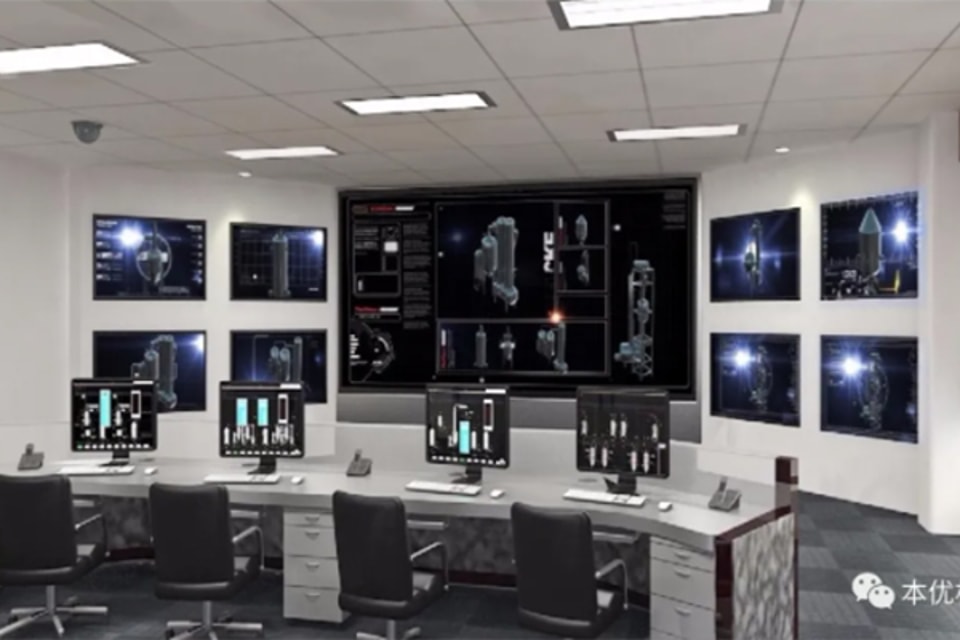
The characteristics of biological fermentation reaction parameters arediverse. It is changing not only with time, but also with the metabolism of flora.At the same time, the law is also changing, which is a nonlinear system.Initially, laboratory analysis was performed through manual sampling to obtain information about the parametric variable of the fermentation system, thereby controlling the entire fermentation process. Although this low-automatic operation method saves initial equipment investment, it also faces some problems in use: increased labor costs, large raw material energy consumption,low equipment utilization, parameter information feedback delay, personnel operation errors or mistakes and unstable products yield.
Facing the increasingly fierce market competition, more and more companies arelooking for improving the production process, such as the introduction of automatic control systems in fermentation process, the use of test technology,sensing technology, fuzzy prediction control technology for the digital control of temperature, tank pressure, pH, dissolved oxygen, air volume, fed, foam, agitation speed, and motor display of incorrect operation. It not only saves a lot of manpower, but also improves production efficiency and product quality.
Introduction of Fermentation Automatic Control System
Fermentation parameters are the physiological and biochemical characteristics of the fermentation process and its strains, and it is also the main basis for people to control the fermentation process. In the fermentation process,the key to achieving automatic control is the sensors which measure various parameters. The variable changes of fermentation process detected by the sensors are converted into a standard electric signal from non-electric signal by the transmitter. Finally, they are displayed, recorded or transmitted to the computer for processing by the instrument.
The fermentation automation control system includes three parts: detecting element, control part and action element.
1.Detecting Element
There are different kinds of classification methods for sensors. It can be classified as offline sensor and online sensor according to the measurement methods; as sensors made by force sensing element, heat sensing element, light sensing element, magnetic sensing element, electrochemical element and biosensor according to the measurement principles. Because of the easy transmission of electric signals, most sensors are outputting electric signals, such as voltage, current, resistance, inductance,capacitance, and frequency.
2.Control Part
The main function of the control part is to compare various parameter signals detected by the detecting elements with predetermined values, and meanwhile to output signal commands to the actuator for the adjustment control. Switch control and analog control are generally used. Switch control refers to the two states of on and off, and is represented by 0 and 1, which is either on state or off state. For example, in the control of fermentation process, the switch control can only control the opening and closing of the valves. Analog control refers to the control which can not only control the opening and closing of the valves,but also can control the opening and closing degrees of the valves in thefermentation process control, so as to play a regulatory role.
3.Action Element
The action element is an element that directly performs the control action,such as electromagnetic valve, pneumatic control valve, electric control valve,reducer, peristaltic pump, etc. It reflects the signal output by the controller or the control variable changed by the operator's manual intervention. The actuator can operate continuously or intermittently.
Actuators can be divided into pneumatic actuators, electric actuators and hydraulic actuators according to their different power. The most used infermentation are pneumatic diaphragm control valve, pneumatic ball valve,pneumatic angle seat valve, electromagnetic valve, etc.
Detectionand Control of Conventional Parameters in Fermentation Process
1.Temperature
In the fermentation process, a resistance thermometer is usually used to detect the fermentation temperature. Resistance temperature measurement is based on the properties of the resistance value on metal conductors or semiconductors which is changing with temperature, and the change of resistance value is converted into an electric signal. The electric signal passes the control commands to the actuator through control instrument and various control switches or loops. Thus, it can turn on (close) the cooling (heating)device to keep the tank temperature constant and achieve the purpose of automatic temperature control.
When the fermentation temperature control finishes,there always exists hysteres is phenomenon. Timely and reasonable control often requires the experience and skills of engineers.
2.Tank Pressure
There are many types of pressure sensors, including resistance strain gage type, piezoresistive type, inductance type, and capacitive type. Among them,the most widely used is the piezoresistive-type pressure sensor, which has higher accuracy and better linear characteristics, and besides medium price.The pressure transmitter converts the pressure of the fermentation tank into anelectric signal to access the control system. The pressure control method isgenerally to adjust the intake flow-rate or air displacement to maintain the required pressure during the fermentation process.
3.Agitation Speed
The agitation speed can be measured with a magnetic induction velocimeter,a light induction velocimeter or a tachometer generator.
4. Air Flow Rate and Liquid Spraying Rate
Flow rate detection generally includes the uses of metal float flow-meter,electromagnetic flow-meter, vortex flow-meter, etc.
Metal float flow-meter must be installed vertically and the strike is from bottom to top. When material or air passes by, a pressure difference is created on both sides of the float, which causes a levitation of the float with an upward impulse. As the flow rate changes, the position of the floating rotor also changes, causing a change in capacitance or resistance, which is converted into an electric signal. After amplification, the starting controller can realize the automation of flow rate control.
Electromagnetic flow-meter uses the principle of flow liquid cutting magnetic field to generate induced electromotive force to detect the flow rate,and can be used to detect the flow rate of conductive fluids (such ascirculating water, etc.).
Vortex flow-meter, whose basic principle is the Kármán vortex street,uses the relation that vortex flow separation frequency is proportional to the flow rate to detect the flow rate. The vortex flow-meter can be used to detect the flow rate of the conductive or non-conductive fluid, so its applications are very wide. It can be used for the detection of steam, air and pure water.
5.Volume, Weight and Foam
The detection of volume generally adopts the differential pressure method which means the liquid spraying volume and liquid height can be calculated by using different pressures between the upper and lower two or three points of the fermentation tank. A differential pressure transmitter is usually installed on the fermentation tank to detect the volume in the tank.
In addition, the weighing sensor can also be used to detect the weight ofmaterial in the tank. The weighing sensor is often used in the fermentation batching section.
Foam detection generally uses electrode probe method. When the foam rises and reaches the sensor, an electric signal is generated, then the signal is fed back, an alarm is given, and de-foaming agent is added.
6.P H
The pH test generally uses a composite pH electrode. This kind of electrode has a compact structure and can be sterilized by steam. Its working principle is that it has a certain electromotive force when immersed in a solution with aglass electrode and a reference electrode. The pH transmitter is connected to the control part, and the automatic valve or peristaltic pump is controlled by the loop system to adjust the pH value.
7.Dissolved Oxygen
At present, due to its own characteristics, the fermentation industry uses the method of expressing percent saturation of air to represent dissolved oxygen. Before inoculation, the conditions of normal culture are simulated (agitation,temperature, tank pressure, aeration), and full-scale calibration is performed.At this time, dissolved oxygen is regarded as 100%, and it will not be corrected after adjustment until the end of fermentation. Therefore, the reading data displayed by the dissolved oxygen electrode during the fermentation process is actually the percentage of dissolved oxygen content during calibration.
Generally, in deep submerged fermentation process, the concentration of dissolved oxygen depends on the speed of oxygen’s entering the culture medium and the speed of oxygen consumption by biological cells. The main factors affecting the speed of oxygen’s entering the medium are agitation speed, air flow rate and tank pressure. Depending on different fermentation technologies,the way to adjust the dissolved oxygen is also different. The agitation speed can be adjusted first before adjusting the air flow and tank pressure, or one ofthem can be adjusted only.
Characteristics of Shanghai Beyond Fermentation DCS Automatic Control System
Shanghai Beyond fermentation DCS distributed control system includes the control engine which is composed of PLC programmable controller including PLC integrated circuit board and operation computer (or man-machine interface). It has the characteristics of centralized management and decentralized control. The calculation control and fermentation data collection are all completed by the PLC controller, and the entire fermentation process is real-time monitored through the operation computer (or man-machine interface) to organize the recorded data. PLC control system has high performance-price ratio and good stability, and has become the first choice of automatic control core for small and medium-sized control systems.
The whole system is composed of host computer/field touch screen,man-machine interface, PLC, field detection controller, field display meter,etc., and it communicates with Ethernet through field-bus.
The PLC system mainly completes the collection and control of each detection quantity in the system, and transmits the data to the host computer through the data line. The host computer configuration software completes the functions of system's real-time data displaying, recording, parameter setting and historical data processing.
The host computer can beconnected through the Internet. Under authorization, any operator with network connection can operate the system.
Above is all we talked today about the application of Auto-Control Technology in Bio-Fermentation, if any question or request, please contact Beyond service engineer.
7/1, 2020
