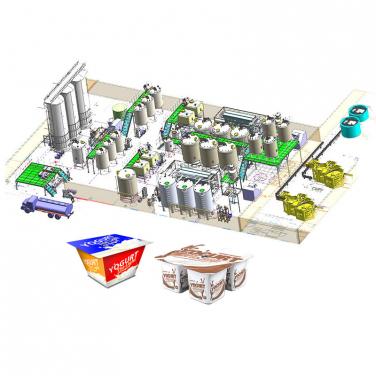

Lemon juice has become a staple in both the food and beverage industries, offering versatility in culinary, beverage, and health applications. Modern lemon juice production lines combine automation, efficiency, and sustainable technology to meet increasing consumer demand. In Turkey, emerging industrial projects are leveraging state-of-the-art equipment and green energy solutions to establish high-performance automatic processing lines.
Equipment in a Lemon Juice Production Line
A comprehensive automatic lemon juice processing line includes several specialized machines that optimize quality and productivity:
-
Washing and Sorting Machines – Fresh lemons are thoroughly cleaned to remove dirt, pesticides, and other impurities. Automated sorting ensures uniform size and quality, essential for consistent juice extraction.
-
Juice Extraction Units – Advanced hydraulic presses and rotary extractors efficiently separate juice from pulp while minimizing waste. Some lines also use cold-press technology to preserve flavor and nutrients.
-
Filtration and Clarification Systems – Juice passes through decanters, centrifuges, or membrane filters to remove seeds, pulp residues, and solids, resulting in clear, premium-quality juice.
-
Pasteurization and Sterilization Equipment – High-temperature short-time (HTST) pasteurizers or ultra-pasteurization systems extend shelf life while retaining taste and nutritional value.
-
Mixing and Homogenization Tanks – These tanks ensure uniformity of pulp and flavor in mixed lemon juice products, preventing sedimentation and enhancing texture.
-
Filling and Packaging Machines – Automated bottling and carton-filling systems provide aseptic or standard packaging options. Advanced sealing and sterilization technologies guarantee food safety and long shelf life.
-
Control and Automation Systems – PLC-based systems, sensors, and SCADA interfaces provide full monitoring and control, enabling predictive maintenance and maximizing efficiency.
End Products from a Lemon Juice Processing Line: Expanding Market Opportunities
A modern automatic lemon juice processing line is not limited to producing just fresh juice. By integrating advanced extraction, filtration, pasteurization, and packaging technologies, manufacturers can produce a wide variety of lemon-based products that cater to multiple industries—from beverages and food to pharmaceuticals and cosmetics. Turkey, with its expanding citrus projects, is increasingly leveraging such lines with green energy and wisdom processing line technologies to boost efficiency and sustainability.
1. Fresh Lemon Juice
- Description: Ready-to-drink, minimally processed juice that retains natural flavor and nutrients.
- Uses: Beverage industry, culinary applications, health and wellness products.
- Market Trend: High consumer demand for organic, cold-pressed, and additive-free juices.
2. Lemon Juice Concentrate
- Description: Water is removed under vacuum or low-temperature conditions to produce a concentrated form for storage and transport.
- Uses: Industrial food production, beverage manufacturing, cocktail mixers, and export markets.
- Advantage: Lower shipping costs, longer shelf life, and versatile reconstitution.
3. Lemon Pulp and Pulp-Infused Juices
- Description: Pulp is either partially retained or added back to the juice for texture and fiber content.
- Uses: Smoothies, functional beverages, bakery fillings.
- Benefit: Adds dietary fiber and enhances mouthfeel, appealing to health-conscious consumers.
4. Lemon Cordial and Syrups
- Description: Sweetened, concentrated lemon liquids used for flavoring.
- Uses: Cocktail mixers, soft drinks, desserts, and culinary sauces.
- Market Opportunity: High-margin products for cafes, restaurants, and beverage manufacturers.
5. Lemon Essential Oil and Flavor Extracts
- Description: Extracted from lemon peel during processing, often using cold-press or steam distillation.
- Uses: Food flavoring, cosmetics, cleaning products, aromatherapy.
- Sustainability Aspect: Integrates green energy solutions by utilizing waste peels for energy or oil extraction.
6. Frozen Lemon Juice Blocks
- Description: Lemon juice is frozen into blocks or IQF (individually quick-frozen) cubes.
- Uses: Foodservice industry, beverage preparation, industrial applications.
- Advantage: Extends shelf life without preservatives and maintains natural flavor.
7. Fortified or Functional Lemon Drinks
- Description: Lemon juice combined with vitamins, minerals, probiotics, or herbal extracts.
- Uses: Health drinks, immunity boosters, sports beverages.
- Market Trend: Rapid growth due to rising health-conscious and functional beverage markets.
8. By-Products for Animal Feed and Pectin
- Description: Residues from juice extraction—peels, seeds, pulp—can be processed into pectin or animal feed.
- Uses: Food industry (jam, jelly, bakery) and livestock feed.
- Sustainability: Fully aligns with green energy and circular economy practices.
Turkey Projects and Wisdom Processing Lines
Modern lemon juice projects in Turkey increasingly adopt:
- Automatic processing lines for efficiency and consistent quality.
- Green energy solutions such as solar-powered operations or biogas from lemon peel waste.
- Wisdom processing line technology using AI and IoT to optimize extraction, reduce waste, and ensure real-time quality monitoring.
By producing a diversified range of lemon products, manufacturers can access multiple market segments—from retail and foodservice to pharmaceuticals and cosmetics—while maximizing profitability and sustainability.
Innovations in Turkey Projects: Green Energy and Wisdom Processing Lines
Turkey has recently witnessed a surge in modern lemon juice projects that integrate sustainability and smart technology:
-
Green Energy Solutions – Many new processing lines utilize solar or biomass energy to reduce electricity costs and environmental impact, aligning with global sustainability standards.
-
Wisdom Processing Lines – AI-enabled systems optimize juice extraction, monitor quality in real-time, and predict maintenance needs, improving efficiency while reducing waste.
-
Automatic Processing Lines – Fully automated lines minimize human intervention, ensuring consistent quality, higher throughput, and lower operational costs.
Lemon Juice Products Market
The global lemon juice market is expanding due to rising health awareness, increased demand for natural and organic products, and the beverage industry's growth. Key market trends include:
-
Fresh Lemon Juice: Popular in beverages, culinary applications, and natural remedies.
-
Concentrated Lemon Juice: Used in food processing, beverages, and industrial applications.
-
Organic and Cold-Pressed Products: Growing consumer preference for minimally processed and chemical-free juices.
-
Regional Growth in Turkey: Turkey is a major citrus producer, and domestic processing projects are expanding to meet both local demand and export opportunities in Europe and the Middle East.
Modern lemon juice production lines in Turkey combine advanced equipment, green energy, and smart automation, creating efficient, sustainable, and high-quality products. These innovations support growing market demand and position Turkey as a competitive player in the global lemon juice industry.