
How to Start a Mango Processing Plant: Complete Project Cost Analysis (2025)
Starting a mango processing plant requires strategic planning across multiple investment categories. Based on current market data and equipment pricing, a small-to-medium scale facility (5-20 tons/day) requires USD 240,000–500,000, while large-scale industrial plants (100+ TPD) need USD 1.5–5 million .
1. Capital Investment Breakdown by Scale
Small-Scale Plant (5-10 TPD / 1,500–3,000 t/year)
| Category | Equipment/Components | Estimated Cost (USD) |
| Land & Building | 1,000–2,000 m² industrial space | $30,000–80,000 |
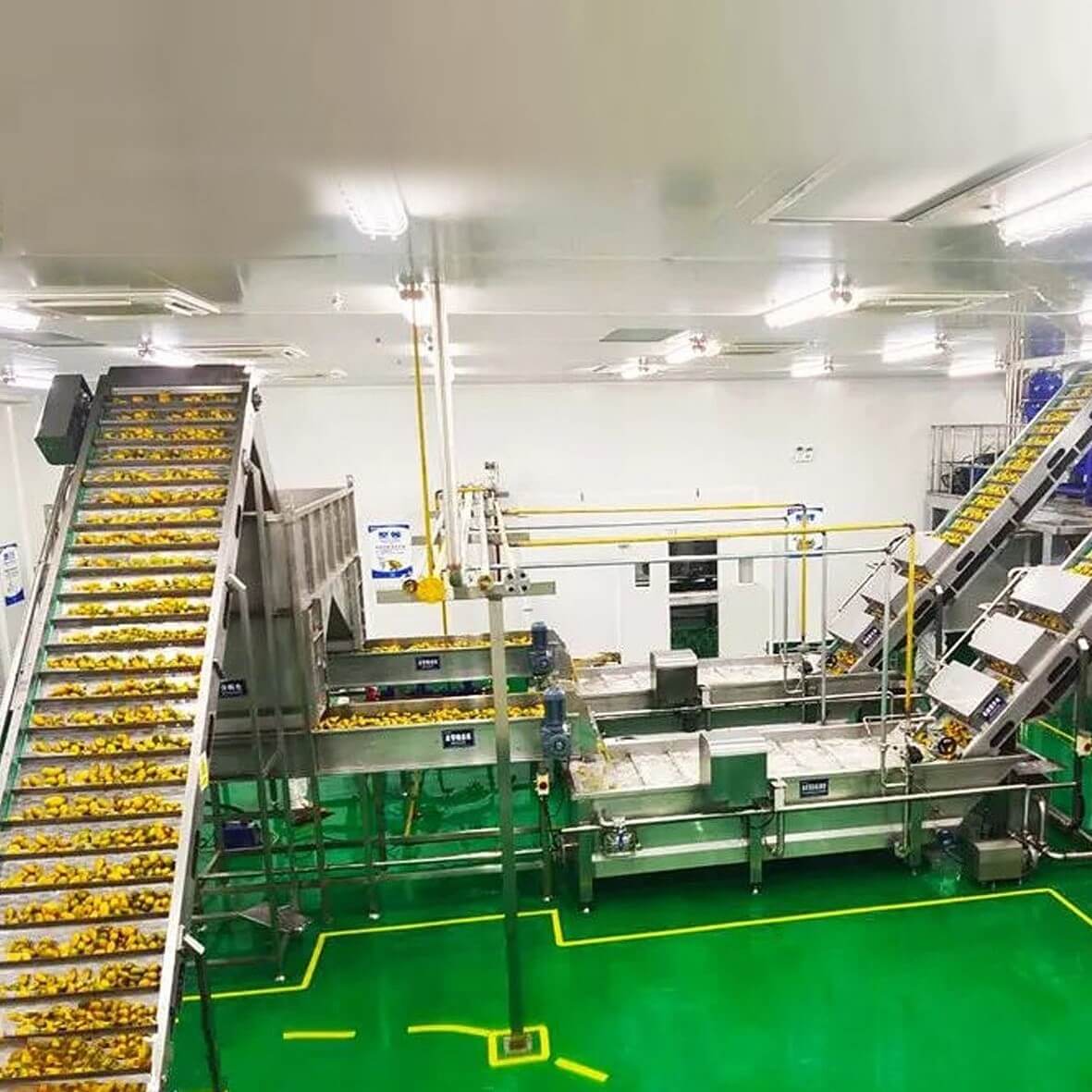
| Receiving & Pre-processing | Washing tanks, sorting tables, peeling machines | $15,000–30,000 |
| Core Processing | Pulp extraction machine ($4,000–10,000) , destoner, pulper | $20,000–40,000 |
| Refining & Filtration | Vibrating screens, centrifuge, decanter | $15,000–25,000 |
| Concentration (Optional) | Single-effect evaporator | $20,000–35,000 |
| Pasteurization | Plate heat exchanger, HTST system | $15,000–30,000 |
| Filling & Packaging | Semi-automatic filling machine, sealing equipment | $20,000–40,000 |
| Cold Storage | Walk-in coolers, refrigeration system | $25,000–50,000 |
| Utilities & Infrastructure | Water treatment, steam boiler, electrical | $30,000–50,000 |
| Quality Control Lab | Basic testing equipment | $10,000–20,000 |
| Working Capital | Raw materials, packaging, 3-month operating costs | $40,000–80,000 |
| TOTAL | | $240,000–480,000 |
Medium-Scale Plant (20-50 TPD / 6,000–15,000 t/year)
| Category | Equipment/Components | Estimated Cost (USD) |
| Land & Building | 3,000–5,000 m² with expansion capacity | $80,000–200,000 |
| Automated Receiving Line | Roller conveyors, AI sorting, washing system | $50,000–100,000 |
| Processing Line | Complete automated line ($24,000–30,000 base) , destoner, refiner | $80,000–150,000 |
| Concentration System | 3-effect TVR evaporator, aroma recovery | $80,000–150,000 |
| UHT/Sterilization | Tubular UHT, aseptic holding tank | $60,000–120,000 |
| Aseptic Filling | Brick/ carton filling machine, PET line | $100,000–200,000 |
| Cold Chain & Warehouse | Cold rooms, blast freezer, AGV system | $80,000–150,000 |
| Wastewater Treatment | ETP (effluent treatment plant), biogas recovery | $40,000–80,000 |
| QC Lab & R&D | HPLC, microbiology lab, pilot plant | $30,000–60,000 |
| Automation & IT | MES system, SCADA, traceability software | $30,000–60,000 |
| Working Capital | 6-month operating buffer | $100,000–200,000 |
| TOTAL | | $730,000–1,470,000 |
Large-Scale Industrial Plant (100+ TPD / 30,000+ t/year)
| Category | Investment Range (USD) |
| Land, Civil Works & Infrastructure | $300,000–800,000 |
| Complete Processing Line (turnkey) | $500,000–1,500,000 |
| Multi-Effect Evaporation (TVR/MVR) | $200,000–500,000 |
| Aseptic Filling & Packaging (multiple lines) | $300,000–800,000 |
| Cold Storage & Automated Warehouse | $200,000–500,000 |
| Wastewater Treatment & Energy Recovery | $150,000–400,000 |
| Quality Control & Certifications | $100,000–250,000 |
| Working Capital | $300,000–800,000 |
| TOTAL | $2,050,000–5,550,000 |
2. Operating Cost Analysis (Annual)
Based on NIFTEM-T's detailed project report for a 150 t/year mango RTS plant :
| Cost Category | % of Total | Small Scale (USD) | Medium Scale (USD) |
|
| Raw Materials (mangoes, sugar, additives) | 60–70% | $180,000–350,000 | $720,000–1,400,000 |
| Packaging Materials | 10–15% | $30,000–75,000 | $120,000–300,000 |
| Utilities (electricity, water, steam) | 5–8% | $15,000–40,000 | $60,000–160,000 |
| Labor (skilled + unskilled) | 8–12% | $24,000–60,000 | $96,000–240,000 |
| Maintenance & Repairs | 2–3% | $6,000–15,000 | $24,000–60,000 |
| Marketing & Distribution | 3–5% | $9,000–25,000 | $36,000–100,000 |
| Insurance & Administrative | 2–3% | $6,000–15,000 | $24,000–60,000 |
| Depreciation | 5–7% | $15,000–35,000 | $60,000–140,000 |
| TOTAL OPERATING COSTS | | $285,000–615,000 | $1,140,000–2,460,000 |
Key Insight: Raw materials constitute 60–70% of production costs, making procurement strategy and mango variety selection critical for profitability .
3. Revenue Projections & Financial Metrics
Product Portfolio & Pricing (FOB Factory)
| Product | Yield from Raw Mango | Price (USD/kg) | Margin |
| Mango Pulp (aseptic bags) | 25–30% | $0.80–1.20 | 25–35% |
| Mango Concentrate (28–30°Brix) | 12–15% | $1.50–2.50 | 30–40% |
| NFC Mango Juice | 20–25% | $1.00–1.80 | 20–30% |
| Mango Puree (retail) | 30–35% | $1.20–2.00 | 25–35% |
| Dried Mango Slices | 8–10% | $3.00–5.00 | 40–50% |
| IQF Mango Chunks | 10–12% | $1.50–2.50 | 30–40% |
Financial Indicators (Medium-Scale Example)
| Metric | Value | Benchmark |
| Annual Revenue | $1.5–3.0 million | At 70% capacity utilization |
| EBITDA Margin | 18–25% | Industry standard: 15–22% |
| Break-Even Point (BEP) | 35–45% capacity | Excellent: <50% |
| Payback Period | 2.5–4 years | Good: 3–5 years |
| IRR (Internal Rate of Return) | 22–28% | Attractive: >15% |
| NPV (10-year, 10% discount) | $800K–1.5M | Positive value creation |
Reference Case: NIFTEM-T's model project shows BCR of 1.77, payback in 2 years, and DSCR of 2.16 .
4. Critical Cost Factors & Optimization Strategies
1. Seasonality Management
- Challenge: Mango processing is highly seasonal (3–4 months peak availability)
- Solution: Multi-fruit processing capability (guava, papaya, pineapple) during off-season; strategic raw material procurement with 20–30% price premium for extended supply
2. Scale Economies
- Small plants (5–20 TPD): Higher per-unit costs, suitable for niche/local markets
- Large plants (100+ TPD): 40–60% lower per-unit processing costs, but higher capital intensity and market risk
3. Technology Choices
| Technology Level | Investment | Labor | Quality | Best For |
| Manual/Semi-auto | Low | High | Variable | Micro-enterprises, pilot projects |
| Semi-automatic | Medium | Medium | Good | Regional players, 500–2,000 L/day |
| Fully automatic | High | Low | Excellent | Export-oriented, >10,000 L/day |
4. Packaging Format Impact
| Format | Equipment Cost | Material Cost | Market | Shelf Life |
| Aseptic bags in drums | Lowest | Lowest | Industrial/B2B | 12–24 months |
| Cans | Medium | Medium | Mass retail | 18–24 months |
| Glass bottles | Medium | High | Premium retail | 12–18 months |
| PET bottles | Medium | Medium | Modern retail | 6–12 months |
| Tetra Pak | Highest | Highest | Premium/UHT | 6–12 months |
5. Risk Mitigation & Financing
Key Risks
| Risk | Probability | Impact | Mitigation |
| Raw material price volatility | High | Severe | Long-term contracts, vertical integration |
| Seasonal supply shortage | High | Severe | Multi-location sourcing, cold storage |
| Equipment failure | Medium | Moderate | Preventive maintenance, spare parts inventory |
| Market price pressure | Medium | Moderate | Product diversification, premium positioning |
| Regulatory non-compliance | Low | Severe | HACCP, ISO 22000, third-party audits |
Financing Options
- Government subsidies: Up to 35% capital subsidy (PMFME scheme in India)
- Bank term loans: 60–70% of project cost, 7–10 year tenure
- Equipment financing: Lease/hire-purchase for imported machinery
- Venture capital: For innovative products (HPP, organic, functional)
6. Implementation Roadmap
| Phase | Timeline | Key Activities | Investment (%) |
| Feasibility & Design | 0–3 months | Market study, site selection, DPR, approvals | 5–10% |
| Civil & Infrastructure | 3–9 months | Land development, building, utilities | 20–30% |
| Equipment Procurement | 6–12 months | Tendering, FAT, shipping, installation | 40–50% |
| Commissioning & Trials | 12–15 months | IQ/OQ/PQ, product validation, staff training | 10–15% |
| Commercial Operations | 15–18 months | Market launch, stabilization, optimization | 5–10% |
7. Investment Decision Matrix
| Your Situation | Recommended Scale | Investment Range | Key Success Factor |
| Startup, limited capital, local market | 5–10 TPD | $250K–500K | Niche product, direct distribution |
| Growing business, regional expansion | 20–50 TPD | $750K–1.5M | Multi-product, cold chain investment |
| Established player, export focus | 100+ TPD | $2M–5M | Scale economies, global certifications |
| Innovation-driven, premium positioning | 10–30 TPD + HPP | $1M–2M | Technology differentiation, brand building |
Final Recommendation: Start with medium-scale semi-automatic line (20–30 TPD) at USD 800K–1.2M investment, targeting regional markets with mango pulp and concentrate as core products, while maintaining flexibility for NFC juice and dried mango diversification. This offers optimal balance of risk, return, and scalability.
1. Capital Investment Breakdown by Scale
Small-Scale Plant (5-10 TPD / 1,500–3,000 t/year)
| Category | Equipment/Components | Estimated Cost (USD) |
| Land & Building | 1,000–2,000 m² industrial space | $30,000–80,000 |
| Receiving & Pre-processing | Washing tanks, sorting tables, peeling machines | $15,000–30,000 |
| Core Processing | Pulp extraction machine ($4,000–10,000) , destoner, pulper | $20,000–40,000 |
| Refining & Filtration | Vibrating screens, centrifuge, decanter | $15,000–25,000 |
| Concentration (Optional) | Single-effect evaporator | $20,000–35,000 |
| Pasteurization | Plate heat exchanger, HTST system | $15,000–30,000 |
| Filling & Packaging | Semi-automatic filling machine, sealing equipment | $20,000–40,000 |
| Cold Storage | Walk-in coolers, refrigeration system | $25,000–50,000 |
| Utilities & Infrastructure | Water treatment, steam boiler, electrical | $30,000–50,000 |
| Quality Control Lab | Basic testing equipment | $10,000–20,000 |
| Working Capital | Raw materials, packaging, 3-month operating costs | $40,000–80,000 |
| TOTAL | | $240,000–480,000 |
Medium-Scale Plant (20-50 TPD / 6,000–15,000 t/year)
| Category | Equipment/Components | Estimated Cost (USD) |
| Land & Building | 3,000–5,000 m² with expansion capacity | $80,000–200,000 |
| Automated Receiving Line | Roller conveyors, AI sorting, washing system | $50,000–100,000 |
| Processing Line | Complete automated line ($24,000–30,000 base) , destoner, refiner | $80,000–150,000 |
| Concentration System | 3-effect TVR evaporator, aroma recovery | $80,000–150,000 |
| UHT/Sterilization | Tubular UHT, aseptic holding tank | $60,000–120,000 |
| Aseptic Filling | Brick/ carton filling machine, PET line | $100,000–200,000 |
| Cold Chain & Warehouse | Cold rooms, blast freezer, AGV system | $80,000–150,000 |
| Wastewater Treatment | ETP (effluent treatment plant), biogas recovery | $40,000–80,000 |
| QC Lab & R&D | HPLC, microbiology lab, pilot plant | $30,000–60,000 |
| Automation & IT | MES system, SCADA, traceability software | $30,000–60,000 |
| Working Capital | 6-month operating buffer | $100,000–200,000 |
| TOTAL | | $730,000–1,470,000 |
Large-Scale Industrial Plant (100+ TPD / 30,000+ t/year)
| Category | Investment Range (USD) |
| Land, Civil Works & Infrastructure | $300,000–800,000 |
| Complete Processing Line (turnkey) | $500,000–1,500,000 |
| Multi-Effect Evaporation (TVR/MVR) | $200,000–500,000 |
| Aseptic Filling & Packaging (multiple lines) | $300,000–800,000 |
| Cold Storage & Automated Warehouse | $200,000–500,000 |
| Wastewater Treatment & Energy Recovery | $150,000–400,000 |
| Quality Control & Certifications | $100,000–250,000 |
| Working Capital | $300,000–800,000 |
| TOTAL | $2,050,000–5,550,000 |
2. Operating Cost Analysis (Annual)
Based on NIFTEM-T's detailed project report for a 150 t/year mango RTS plant :
| Cost Category | % of Total | Small Scale (USD) | Medium Scale (USD) |
|
| Raw Materials (mangoes, sugar, additives) | 60–70% | $180,000–350,000 | $720,000–1,400,000 |
| Packaging Materials | 10–15% | $30,000–75,000 | $120,000–300,000 |
| Utilities (electricity, water, steam) | 5–8% | $15,000–40,000 | $60,000–160,000 |
| Labor (skilled + unskilled) | 8–12% | $24,000–60,000 | $96,000–240,000 |
| Maintenance & Repairs | 2–3% | $6,000–15,000 | $24,000–60,000 |
| Marketing & Distribution | 3–5% | $9,000–25,000 | $36,000–100,000 |
| Insurance & Administrative | 2–3% | $6,000–15,000 | $24,000–60,000 |
| Depreciation | 5–7% | $15,000–35,000 | $60,000–140,000 |
| TOTAL OPERATING COSTS | | $285,000–615,000 | $1,140,000–2,460,000 |
Key Insight: Raw materials constitute 60–70% of production costs, making procurement strategy and mango variety selection critical for profitability .
3. Revenue Projections & Financial Metrics
Product Portfolio & Pricing (FOB Factory)
| Product | Yield from Raw Mango | Price (USD/kg) | Margin |
| Mango Pulp (aseptic bags) | 25–30% | $0.80–1.20 | 25–35% |
| Mango Concentrate (28–30°Brix) | 12–15% | $1.50–2.50 | 30–40% |
| NFC Mango Juice | 20–25% | $1.00–1.80 | 20–30% |
| Mango Puree (retail) | 30–35% | $1.20–2.00 | 25–35% |
| Dried Mango Slices | 8–10% | $3.00–5.00 | 40–50% |
| IQF Mango Chunks | 10–12% | $1.50–2.50 | 30–40% |
Financial Indicators (Medium-Scale Example)
| Metric | Value | Benchmark |
| Annual Revenue | $1.5–3.0 million | At 70% capacity utilization |
| EBITDA Margin | 18–25% | Industry standard: 15–22% |
| Break-Even Point (BEP) | 35–45% capacity | Excellent: <50% |
| Payback Period | 2.5–4 years | Good: 3–5 years |
| IRR (Internal Rate of Return) | 22–28% | Attractive: >15% |
| NPV (10-year, 10% discount) | $800K–1.5M | Positive value creation |
Reference Case: NIFTEM-T's model project shows BCR of 1.77, payback in 2 years, and DSCR of 2.16 .
4. Critical Cost Factors & Optimization Strategies
1. Seasonality Management
- Challenge: Mango processing is highly seasonal (3–4 months peak availability)
- Solution: Multi-fruit processing capability (guava, papaya, pineapple) during off-season; strategic raw material procurement with 20–30% price premium for extended supply
2. Scale Economies
- Small plants (5–20 TPD): Higher per-unit costs, suitable for niche/local markets
- Large plants (100+ TPD): 40–60% lower per-unit processing costs, but higher capital intensity and market risk
3. Technology Choices
| Technology Level | Investment | Labor | Quality | Best For |
| Manual/Semi-auto | Low | High | Variable | Micro-enterprises, pilot projects |
| Semi-automatic | Medium | Medium | Good | Regional players, 500–2,000 L/day |
| Fully automatic | High | Low | Excellent | Export-oriented, >10,000 L/day |
4. Packaging Format Impact
| Format | Equipment Cost | Material Cost | Market | Shelf Life |
| Aseptic bags in drums | Lowest | Lowest | Industrial/B2B | 12–24 months |
| Cans | Medium | Medium | Mass retail | 18–24 months |
| Glass bottles | Medium | High | Premium retail | 12–18 months |
| PET bottles | Medium | Medium | Modern retail | 6–12 months |
| Tetra Pak | Highest | Highest | Premium/UHT | 6–12 months |
5. Risk Mitigation & Financing
Key Risks
| Risk | Probability | Impact | Mitigation |
| Raw material price volatility | High | Severe | Long-term contracts, vertical integration |
| Seasonal supply shortage | High | Severe | Multi-location sourcing, cold storage |
| Equipment failure | Medium | Moderate | Preventive maintenance, spare parts inventory |
| Market price pressure | Medium | Moderate | Product diversification, premium positioning |
| Regulatory non-compliance | Low | Severe | HACCP, ISO 22000, third-party audits |
Financing Options
- Government subsidies: Up to 35% capital subsidy (PMFME scheme in India)
- Bank term loans: 60–70% of project cost, 7–10 year tenure
- Equipment financing: Lease/hire-purchase for imported machinery
- Venture capital: For innovative products (HPP, organic, functional)
6. Implementation Roadmap
| Phase | Timeline | Key Activities | Investment (%) |
| Feasibility & Design | 0–3 months | Market study, site selection, DPR, approvals | 5–10% |
| Civil & Infrastructure | 3–9 months | Land development, building, utilities | 20–30% |
| Equipment Procurement | 6–12 months | Tendering, FAT, shipping, installation | 40–50% |
| Commissioning & Trials | 12–15 months | IQ/OQ/PQ, product validation, staff training | 10–15% |
| Commercial Operations | 15–18 months | Market launch, stabilization, optimization | 5–10% |
7. Investment Decision Matrix
| Your Situation | Recommended Scale | Investment Range | Key Success Factor |
| Startup, limited capital, local market | 5–10 TPD | $250K–500K | Niche product, direct distribution |
| Growing business, regional expansion | 20–50 TPD | $750K–1.5M | Multi-product, cold chain investment |
| Established player, export focus | 100+ TPD | $2M–5M | Scale economies, global certifications |
| Innovation-driven, premium positioning | 10–30 TPD + HPP | $1M–2M | Technology differentiation, brand building |
Final Recommendation: Start with medium-scale semi-automatic line (20–30 TPD) at USD 800K–1.2M investment, targeting regional markets with mango pulp and concentrate as core products, while maintaining flexibility for NFC juice and dried mango diversification. This offers optimal balance of risk, return, and scalability.
News
Hot Product